Fee Download Governing the Market: Economic Theory and the Role of Government in East Asian Industrialization, by Robert Wade
Yeah, reading an e-book Governing The Market: Economic Theory And The Role Of Government In East Asian Industrialization, By Robert Wade could include your friends lists. This is among the formulas for you to be successful. As understood, success does not imply that you have terrific points. Recognizing and recognizing even more than various other will provide each success. Close to, the notification and perception of this Governing The Market: Economic Theory And The Role Of Government In East Asian Industrialization, By Robert Wade can be taken and also chosen to act.
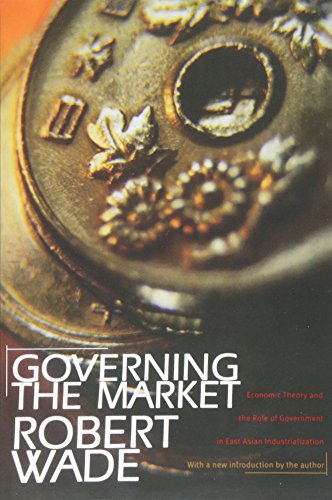
Governing the Market: Economic Theory and the Role of Government in East Asian Industrialization, by Robert Wade

Fee Download Governing the Market: Economic Theory and the Role of Government in East Asian Industrialization, by Robert Wade
Governing The Market: Economic Theory And The Role Of Government In East Asian Industrialization, By Robert Wade. Change your habit to hang or throw away the moment to just chat with your friends. It is done by your everyday, do not you really feel tired? Now, we will reveal you the brand-new routine that, really it's a very old routine to do that can make your life much more qualified. When feeling bored of always chatting with your buddies all spare time, you could discover the book entitle Governing The Market: Economic Theory And The Role Of Government In East Asian Industrialization, By Robert Wade then review it.
The means to get this book Governing The Market: Economic Theory And The Role Of Government In East Asian Industrialization, By Robert Wade is quite easy. You may not go for some places as well as spend the moment to just locate guide Governing The Market: Economic Theory And The Role Of Government In East Asian Industrialization, By Robert Wade As a matter of fact, you could not always obtain the book as you want. But here, only by search as well as discover Governing The Market: Economic Theory And The Role Of Government In East Asian Industrialization, By Robert Wade, you could get the lists of the books that you actually expect. In some cases, there are many books that are showed. Those books certainly will astonish you as this Governing The Market: Economic Theory And The Role Of Government In East Asian Industrialization, By Robert Wade collection.
Are you interested in mostly books Governing The Market: Economic Theory And The Role Of Government In East Asian Industrialization, By Robert Wade If you are still perplexed on which one of guide Governing The Market: Economic Theory And The Role Of Government In East Asian Industrialization, By Robert Wade that should be bought, it is your time to not this website to search for. Today, you will certainly need this Governing The Market: Economic Theory And The Role Of Government In East Asian Industrialization, By Robert Wade as one of the most referred publication and also most needed publication as resources, in other time, you could appreciate for some other publications. It will rely on your prepared needs. But, we constantly suggest that books Governing The Market: Economic Theory And The Role Of Government In East Asian Industrialization, By Robert Wade can be a terrific problem for your life.
Also we talk about guides Governing The Market: Economic Theory And The Role Of Government In East Asian Industrialization, By Robert Wade; you might not discover the published publications here. Numerous compilations are given in soft data. It will precisely give you much more benefits. Why? The first is that you might not need to bring guide everywhere by satisfying the bag with this Governing The Market: Economic Theory And The Role Of Government In East Asian Industrialization, By Robert Wade It is for guide is in soft data, so you can save it in gadget. Then, you could open up the gadget almost everywhere as well as review guide appropriately. Those are some few benefits that can be got. So, take all advantages of getting this soft data book Governing The Market: Economic Theory And The Role Of Government In East Asian Industrialization, By Robert Wade in this website by downloading and install in link offered.
Published originally in 1990 to critical acclaim, Robert Wade's Governing the Market quickly established itself as a standard in contemporary political economy. In it, Wade challenged claims both of those who saw the East Asian story as a vindication of free market principles and of those who attributed the success of Taiwan and other countries to government intervention. Instead, Wade turned attention to the way allocation decisions were divided between markets and public administration and the synergy between them. Now, in a new introduction to this paperback edition, Wade reviews the debate about industrial policy in East and Southeast Asia and chronicles the changing fortunes of these economies over the 1990s. He extends the original argument to explain the boom of the first half of the decade and the crash of the second, stressing the links between corporations, banks, governments, international capital markets, and the International Monetary Fund. From this, Wade goes on to outline a new agenda for national and international development policy.
- Sales Rank: #1153828 in Books
- Brand: Brand: Princeton University Press
- Published on: 2003-11-30
- Original language: English
- Number of items: 1
- Dimensions: 9.21" h x 1.00" w x 6.14" l, 1.48 pounds
- Binding: Paperback
- 496 pages
- Used Book in Good Condition
Review
Winner of the 1992 Best Book Award of the Political Economy Section of the American Political Science Association
"[This] study by Robert Wade is one of only a handful that describes how economic policy in East Asia has actually worked. . . . A superb book. . . . Governing the Market demystifies East Asia's miracle without making it seem any less remarkable. It assaults idle prejudice on every side of the debate about markets and the role of government. It is long overdue, and deserves to be widely read."--Economist
"This valuable book provides a quite detailed and carefully analytical account of the economic development of Taiwan and its political and social setting. . . . [Wade] makes a good case for his view that while market forces, at home and abroad, have been given much play, the government has also played a key part."--Foreign Affairs
About the Author
Robert Wade is Professor of Political Economy at the London School of Economics. He has a long-standing interest in the causes of economic growth and economic inequality on a world scale and has conducted field research in Pitcairn Island, Italy, India, South Korea, Taiwan, and the World Bank. He worked earlier as an economist in the World Bank and in the Office of Technology Assessment (U. S. Congress).
Most helpful customer reviews
5 of 5 people found the following review helpful.
Brilliant Study in Heterodox Economic Growth Theory
By Rufus Burgess
Robert Wade's 'Governing the Market' is a landmark text in development economics. Southeast Asian Tigers are often used to describe the success inherent through trade and market liberalization. What Wade discovers is that this finding is only skin deep. The economic policies of all the Tigers were far from 'free' and often manipulated the market to focus on total production rather than marginal efficiency.
Wade focuses on Taiwan (with comparisons to Japan and South Korea). Taiwan developed a dualistic economy where most of the businesses (~70%) were small firms that operated on a relatively free market. However, the rest of the economy (which accounts for most of the countries production) were highly regulated and controlled by government intervention. Taiwan's government led the market by coercing private firms into investing in new industries that were deemed economically viable. When a private firm would not step in the government went ahead and formed their own public enterprises (which account for a large part of Taiwan's economy). Through highly selective use of import-substitution and export-promotion strategies the economy flourished with unprecedented growth.
The other Tigers followed a similar path as Taiwan, South Korea, and Japan but without selective development policy. This is predominantly why they had lower growth rates. Even Hong Kong, the neoliberal bastion of success, turns out to be a highly regulated economy (p331-333 is essential reading).
Wade comes to a disturbing conclusion: Benevolent authoritarian rule may be necessary for developing nations to thrive. Without authoritarian corporatism it may be very difficult for growth to occur.
The 2003 version is highly preferred to the original because of a new, comprehensive, introduction. The introduction gives a response to critics of 'Governing the Market' and a thorough explanation of the Asian Financial Crisis. The introduction alone is worth the price of most texts.
I highly recommend this to anyone interested in economic growth theory.
5 of 5 people found the following review helpful.
Classic on the taiwanese developmental state
By S. Morgan
"Governing the Market" is almost certainly the seminal work on Taiwan's economic development. The work gives a detailed account of the ways in which state intervention actively promoted economic growth, contrary to the protestations of the IMF-led "Washington Consensus". Rather than focusing on polemical argument, as is so often the case in political economy, Wade's study is extremely detailed and persuasive, explaining both the economics, but also the politics of corruption (and how even corruption can be harnessed into economic productivity).
Personally, I think Wade may have underestimated the importance of widespread education, effective infrastructure, and significant quantities of US aid compared with other parts of the developing world as "lubricants" to jump-starting the economy. Nevertheless, his argument that the state-imposed redistribution of agricultural land went a long ways to generating the necessary surplus for development is solid. Wade also recognizes that this surplus was then harnessed by a government savings-and-loan structure that facilitated capital investment in domestic heavy industry (the "commanding heights" of the economy) - often a difficult task to accomplish. As Wade convincingly contends, there was a significant amount of East Asian-style Fabian socialism involved in Taiwan's development - and the Taiwanese were remarkably successful because of it - despite some of the roadbumps encountered by others who tried to replicate the model (the quasi-successful states of SE Asia: Malaysia, Thailand, and Indonesia).
The first 150 pages of this volume and the conclusion, at minimum, are a must-read for any serious student of developmental economics or political economy. This edition is especially useful because the introduction convincingly addresses claims that rent-seeking led to the 1997-8 crisis with substantial evidence (supported by even conservative economists like Jagdish Bhagwati at Columbia) that excessive portfolio liberalization in the real estate sector was the leading cause of the 1997-8 crash - and even accounting for this, Taiwan and South Korea each recovered remarkably well in a short period of time, and have now joined the ranks of the first world.
Governing the Market: Economic Theory and the Role of Government in East Asian Industrialization, by Robert Wade PDF
Governing the Market: Economic Theory and the Role of Government in East Asian Industrialization, by Robert Wade EPub
Governing the Market: Economic Theory and the Role of Government in East Asian Industrialization, by Robert Wade Doc
Governing the Market: Economic Theory and the Role of Government in East Asian Industrialization, by Robert Wade iBooks
Governing the Market: Economic Theory and the Role of Government in East Asian Industrialization, by Robert Wade rtf
Governing the Market: Economic Theory and the Role of Government in East Asian Industrialization, by Robert Wade Mobipocket
Governing the Market: Economic Theory and the Role of Government in East Asian Industrialization, by Robert Wade Kindle

No comments:
Post a Comment